Part Two
My Time with Mr. Blades
Introduction by Glenn Blaylock - 2026
Over the years, I have shared countless times the story that unfolded after I invited Ken Dryden, one of the greatest ice hockey players of all time, to play goal for the Cambridge University ice hockey team. You can read about what happened in the story ‘Touch of Greatness 1981’.
There is another story connected to these events, one that was deeply meaningful yet has remained separate and very private. Over the years, I have shared it only with my family and a few close friends. Now, though, it feels like the right time to tell the story, because it was an important part of what happened all those years ago.
Spring 1981, Cambridge, England
I was at home studying one spring afternoon when the phone rang. It was the receptionist from the care home, just a short walk from where I was living. She asked if I could come over. I grabbed a jacket as it was cool outside and walked to the home. When I arrived, the receptionist thanked me for coming and motioned toward the door at the end of the hall. I walked down the corridor and opened the door.
Mr. Blades was lying on his bed, a nurse seated beside him, holding his hand. I paused in the doorway. The nurse turned to me and nodded. I felt uncertain about what was happening. Mr. Blades saw me and offered what seemed the faintest smile. Our eyes met, and in that instant I realized. A lump formed in my throat, and I tried to smile back. Maybe it was a few minutes later, or only a few moments, but I remember clearly when he left us.
A Few Months Earlier
Meeting Mr. Blades
Elaine and I lived in the middle of three terraced houses on Union Lane in Chesterton, Cambridge. It was the first Christmas we would share together. We put a roast in the oven and went for a walk along the River Cam, just a short distance from the house. Families and couples were out on the path, exchanging seasonal greetings as they passed. A lone sculler glided past, skimming the surface of the water.
On our way home, we noticed an elderly man. He was tall and slim, with a slight stoop. His white, thinning hair lifted in the cool breeze. A dark overcoat hung loosely around him, and beneath it you could see the striped legs of his pyjamas and a pair of worn slippers. He seemed unsure of where he was.
“Hello sir. Can we help you?” I asked.
In a raspy voice he responded, “Where’s my home?”
“Sorry sir, but I don’t know?” I answered.
For a moment, we stood there uncertain what to do, until Elaine wondered aloud if he might be from Langdon House Care Home, located on Union Lane.
I reached out, lightly took his elbow, and guided him across the street. We walked carefully toward the care home while Elaine headed back to check on the roast.
The home was a single‑storey building with several windows facing the lane. We stepped inside, and approached the receptionist seated behind the desk.
I asked, “Does this gentleman reside here? He was standing on the other side of High Street.”
The receptionist looked up in surprise. “Mr. Blades, how did you leave without me seeing you?”
She thanked me for bringing him back, and when I offered to walk him to his room, she told me I was welcome to. We walked down the hallway, passing three rooms, and entered his at the end of the corridor. I helped him to his single bed, which was positioned to the left of the door.
I introduced myself, but he shook his head slightly. I thought perhaps he couldn’t hear me, so I said I would be right back. I walked down the hall to the reception desk and asked for a pen and paper.
Returning, as there was no chair in the room, I sat on the edge of his bed and wrote my name on the first page, noting that I was from Canada. I showed him what I wrote.
I wasn’t sure if he would understand, but after looking at me for a moment he said, “Nice to meet you, Glenn. What brings you here all the way from Canada?” His voice carried a tremor as he was very frail, but I could understand him well enough.
I thought, “Great, we can communicate.” I wrote that I was attending the university and living nearby. We continued like that for a while, until I said I needed to go, as I had to help prepare our Christmas dinner.
“It was very nice to meet you,” he said as I got up to leave his room.
Boxing
A week later, as I was walking past the care home, I decided to drop in and see how Mr. Blades was doing. Upon entering, I asked the receptionist if it was alright for me to visit Mr. Blades, and she said yes.
His door was open, so I stepped tentatively into the room, careful not to wake him if he was sleeping. He lay on his bed, his head slightly raised on two pillows, staring straight ahead. When he noticed me, his expression changed as though he were trying to place me.
I was surprised to see the piece of paper I had written on still resting on the bedside table. I picked it up and wrote a greeting, my name, and that I was from Canada. He focused, furrowed his brows, and said, “I know”, not as if recalling, but as though wondering why I would think he wouldn’t remember.
“Are you involved with any clubs or sports at the university?” he asked.
“Yes, I’m captain of the ice hockey team.” I wrote.
I remember him looking at me with a puzzled look. He asked a few questions about the history of ice hockey in Cambridge and how the team was getting on.
“Did you play any sports?” I asked.
He said, “I enjoyed boxing.”
He told me how much he loved to train - running, skipping, working the bags, and sparring. What he loved most was being in the boxing ring, one on one, with only himself and the opponent.
Looking at Mr. Blades now, so frail and barely able to get out of bed on his own, it was hard to imagine him in the ring, taking blows and hurling punches. Yet as he recounted his days as a boxer, I could see energy flow through him.
I raised my fists playfully. Mr. Blades frowned and shook his head and said, “That’s not how you make a fist. You’d break your hands if you fought like that.”
He reached forward with both hands, adjusting my thumb and fingers into a proper fist.
He made a fist himself and pressed it against mine. He began to push against my left fist with his right, and I was startled by the strength behind it. We held the pressure between us for a short while, neither of us speaking, just sharing that small, steady connection before he finally eased his hand away.
He laid back on the pillows, thanked me for visiting, and said, “I hope you will come by again.”
Weekly Visits
When Elaine and I first met Mr. Blades by the side of the road, he seemed lost, and we assumed he was struggling with some degree of dementia. What surprised me was how alert he became as we conversed — me writing, him responding verbally — and how each exchange seemed to sharpen his focus.
I dropped in to see him at least once a week and I soon found myself looking forward to our visits as he was keen to hear what was happening in the world around him.
He always wanted an update on the ice hockey team; were we improving, getting into shape or winning any games. I wrote about my experiences with Ken Dryden. Mr. Blades was surprised when I wrote about asking Ken to play goal for the ice hockey team, and he chuckled when I shared the story of him pushing the car through the rain.
I also explained how, after a conversation with Ken, we commissioned a new trophy modelled after the Stanley Cup. Mr. Blades said that he hoped he might see it one day.
I once asked him if he had served in the First World War. He said he had, but when I asked what it was like, his gaze drifted into the distance and he simply shook his head, as if to say it was too difficult to share.
I learned that Mr. Blades was the head gardener at the Cambridge University Botanical Gardens. His expertise drew the attention of prominent families around Cambridge, and he helped tend their private estates. When his time at the Botanical Gardens came to an end, he continued his craft by caring for the gardens at Sidney Sussex College.
Beyond his professional life, he was deeply involved with the Boy Scouts and had a lifelong love of singing. He sang in a choir, and the piece that moved him most was Handel’s Messiah.
I learned from the receptionist that Mr. Blades’s daughter lived out of town and visited from time to time. His health seemed to be deteriorating, so I left a note with the receptionist for her, with my address and phone number in case I could be of any assistance. Not long afterwards, I received a letter from her that included the following.
February 17th, 1981
Dear Mr. Blaylock
Thank you for your note. I am glad to have your address so that I can let you know how much your visits have meant to my father.
Once an active, interested, sociable and fiercely independent man, he has been reduced through old age, sadly, to a state of insularity and confusion. Thank goodness he still retains a spark of humour so characteristic of him, and I have been delighted at the evidence of intelligent response from him, indicted by your written communications.
Sincerely, Jean
Varsity Match
The day before the varsity match with Oxford, I visited Mr. Blades. I wrote that the game was the next day and that six coach loads of players and supporters would be heading to London for the match.
He read my note carefully, looked up at me with a determination I had not seen in him before. He said just one word, “Win.”
A few days later, it was early evening when I walked into Mr. Blades’s room and sat on the side of his bed. I was carrying the trophy we had been awarded after narrowly winning the varsity match. I presented the trophy to him, and he reached out with both hands, placing them on either side.
Shaped like a large rose bowl, the silver surface caught the warm light from the bedside lamp, giving it a golden glow. Being new, the trophy acted like a mirror. I could see his reflection, and I wondered whether he, too, was studying that image, perhaps surprised by the older face looking back at him. He held the trophy for a long moment, quietly taking it in.
After a while, I set the trophy on the bedside table, opened the drawer, and found the pad of paper. I wrote a brief account of the varsity match. When he finished reading, he reached out, took my hand, and simply said, “Well done.”
Farewell
I wasn’t surprised to receive the call from the care home, as I had left my number with the receptionist and she knew I lived close by. As I walked toward the home, I assumed Mr. Blades might be unwell. I had not expected that this would be the last time we would see each other.
Looking back, I often wonder whether Mr. Blades had been waiting for us to meet, or if it was only chance that he slipped away soon after I arrived. Yet something in his eyes told me he understood I was there, and in that moment it felt as though my presence allowed him to finally let go.
The next day, I lifted the receiver when the phone rang. A woman’s voice spoke.
“Is this Glenn?”
When I said yes, she continued, “We haven’t met, but I’m Jean, James Blades’s daughter. I have some sad news. My father passed away yesterday.”
“Yes, I know,” I replied.
There was a pause. “How would you know?”
“I was with him when he passed.”
A long silence followed. I could hear her trying to steady herself. Then she said, “There will be a small service in a couple of days. Could you join us?”
“I’d be honoured,” I answered.
A few days later, in the mid‑afternoon, a car pulled up outside our place on Union Lane. I got in and sat beside Jean while her husband drove. They both seemed to be in their late fifties.
After a moment, I turned to her and asked, “Would you like to know how your father and I met?”
Jean shook her head. “No. Not yet. I’m still trying to understand how someone I’ve not met was with him at the end. Maybe later.”
Only the three of us attended the service. After a brief sermon from the priest, we drove to a nearby hotel and shared a simple lunch.
Jean said, “One day when I was visiting my father I opened the drawer of his bedside table and found notes written on pieces of paper. When I asked the receptionist about them, she told me a young man had been visiting him every week. She said he would write on the pad, and my father would respond.”
She took a breath. “Please tell me how you met my father.”
I told her about meeting him at the side of the road on Christmas Day and how he responded when I introduced myself in writing. I described some of the moments we shared and how interested he was in the ice hockey team.
When I finished, Jean sat for a moment before speaking. “I haven’t had a conversation with my father in a long time,” she said. “It never occurred to me to write.” She paused. “I can’t thank you enough for what you’ve given him these past months.”
She then continued, “My father’s most valued possession is a series of gardening books. I would like you to have them.”
When I asked whether the books should stay with the family, she said that giving them to me felt like one small way to show her gratitude.
“Well then, I’d be glad to,” I responded.
Elaine’s Perspective
After each visit with Mr. Blades, I would share our conversations with Elaine. I recently asked her what the experience had meant to her, and I was surprised by her perspective. Elaine explained:
“I’ve often wondered what brought Glenn and Mr. Blades into each other’s lives, and how two such different paths crossed so profoundly.
In his tribute to Ken Dryden, Glenn didn’t mention that alpine ski racing was his primary sport. In his early teen’s Glenn moved to Whistler Mountain, a ski resort in the mountains of British Columbia where he raced for several years. In fact, shortly after first meeting Mr. Blades, Glenn travelled to St. Moritz, Switzerland, to race with the British university ski team in their annual competition against the Swiss universities.
What were the odds that a young man from a ski resort in the mountains of western Canada would one day be sitting at the bedside of an elderly English gentleman, sharing stories and a trophy from the Oxford–Cambridge varsity ice hockey match? And what were the chances that Glenn would also be with him as he passed from this world.
Glenn has always said it was serendipity that led to their relationship. I’ve often wondered whether something deeper was at work. It felt as though the two of them were drawn together, not by chance alone, but by a quiet thread of destiny, giving companionship and meaning to Mr. Blades in his final days.”
Epilogue
When I returned to Canada that summer, I brought Mr. Blade’s books with me. Published in the 1880s, The Illustrated Dictionary of Gardening – An Encyclopedia of Horticulture was probably the key reference he turned to throughout his working life.
Among the books was his copy of Handel’s Messiah with notations of the dates he performed including the performance of “massed choirs” at Ely Cathedral on April 6th, 1939. There were pictures of him including one standing in a spectacular ‘Corridor’ of plants in Cambridge. He also kept a note signed by Baden Powell, the founder of the Boy Scouts, thanking him for his efforts.
It’s been almost half a century since my time with Mr. Blades. His books sit on a shelf we pass several times a day. Every few years, I take one down, look through the illustrations, and find myself thinking about the moments we shared - feeling his strength and determination as our fists pressed together, watching him hold the varsity trophy in both hands, and, most of all, remembering that final moment when we were together.
A Note From the Author
When I started writing this account of my time with Mr. Blades, I found the letter from his daughter, Jean. I hadn’t remembered that in mid‑February she wrote that her father had “outlived his doctor’s predictions by three weeks.” It was another month before he passed away, and it happened shortly after he and I shared our moment with the varsity trophy.
Looking back now, I wonder whether our time together gave Mr. Blades a sense of purpose—a desire to see how our story would unfold. And if that’s true, then maybe my conversation with Ken Dryden, the one that led to the new trophy, played some small part in giving Mr. Blades a little more time.
This brings me to the end of my account of our experiences with Ken Dryden, Mr. Blades, and the Cambridge University Ice Hockey Club. I feel a quiet sense of fulfillment in finally telling our story. These moments helped shape my life and the lives of everyone involved in a deeply meaningful way.
Maybe someone reading this account will find it an incentive to open a door to a new opportunity to their lives, or face and overcome what seems an insurmountable challenge or spend time with another person when they need it most. If so, then sharing our story has mattered more than I ever expected.
Glenn Blaylock
April, 2026
Appendix
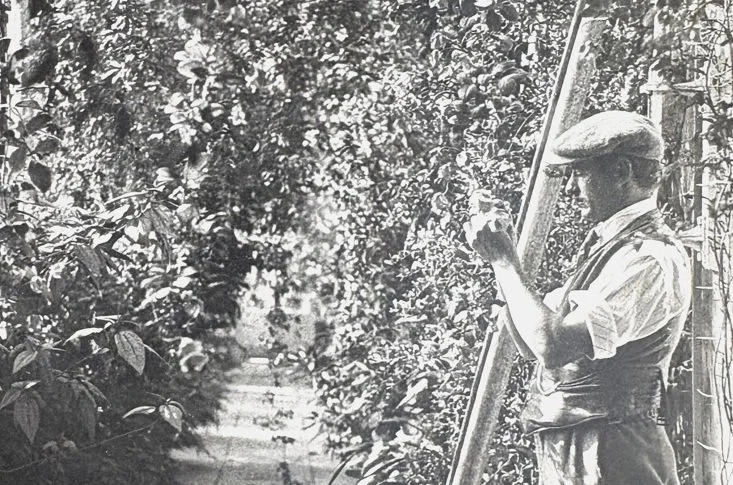
Mr. Blades working at Cambridge University Botanical Gardens - 1930’s
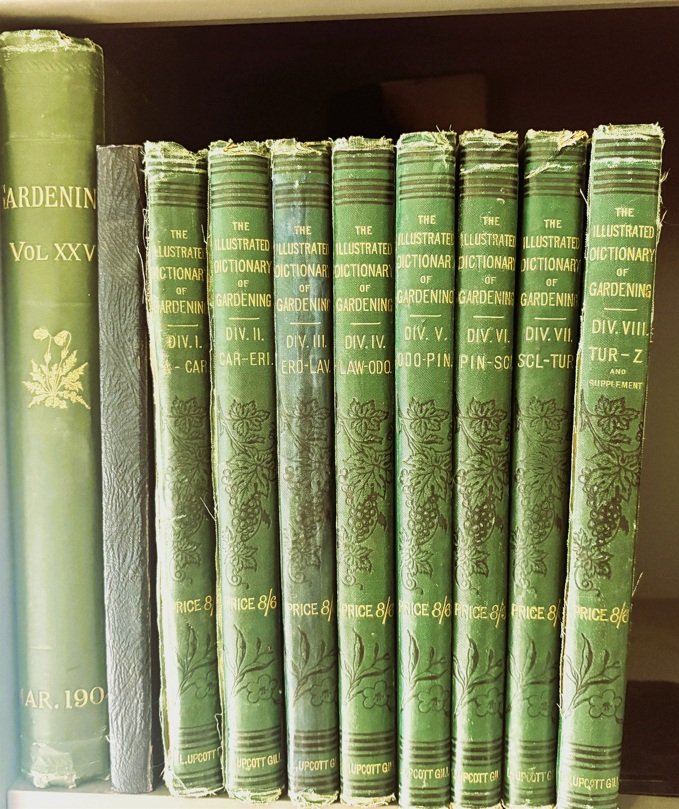
The Illustrated Dictionary of Gardening published in the 1880’s
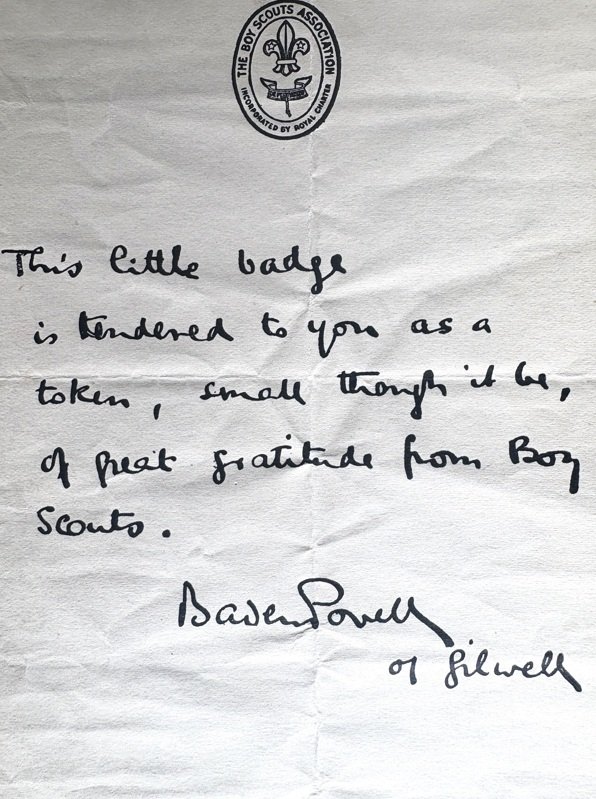
Note from Baden Powell found in Mr. Blades’s books.
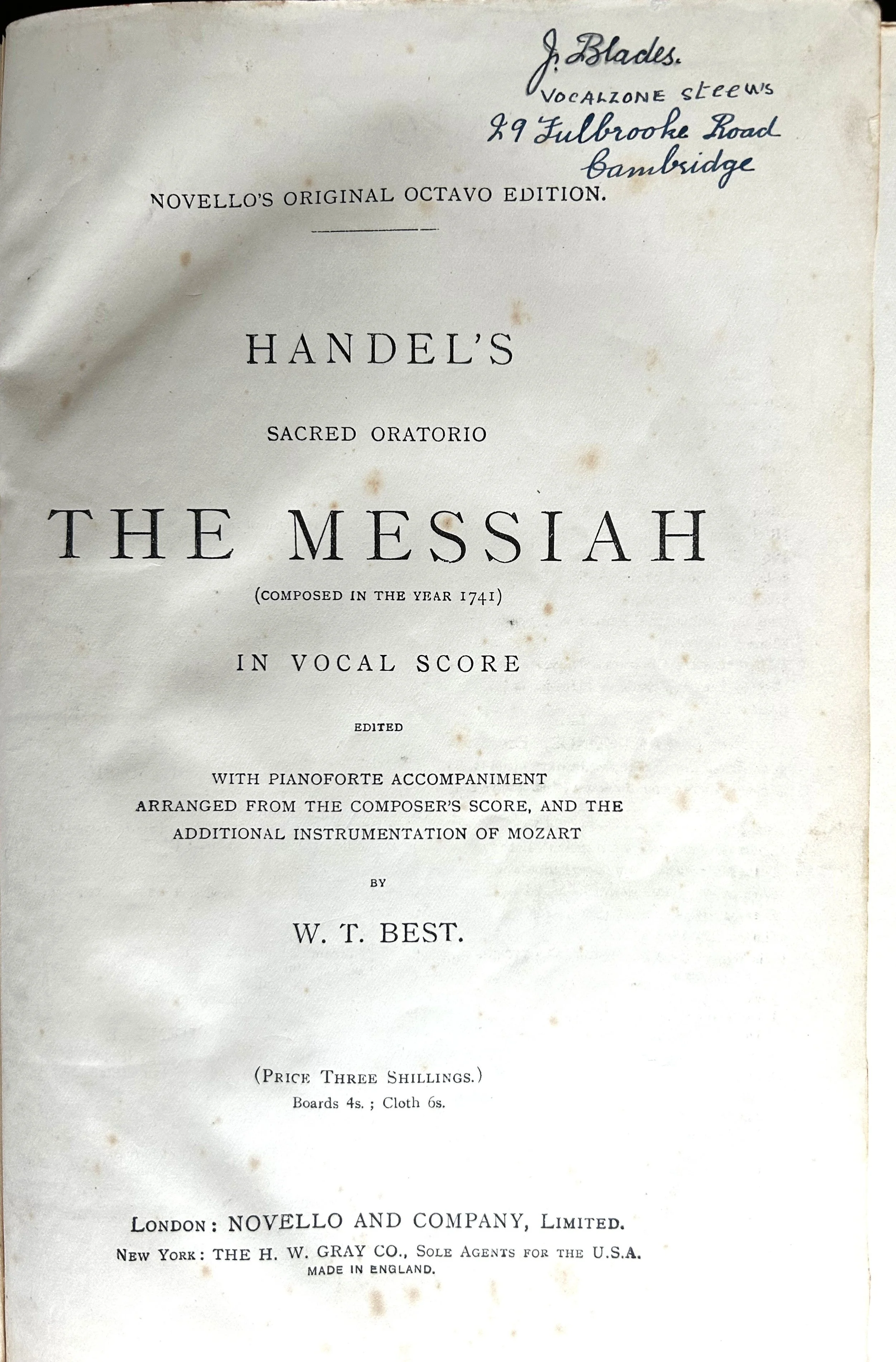
Image of Mr. Blades’s choral book ‘The Messiah’ with his name written on the top right corner.
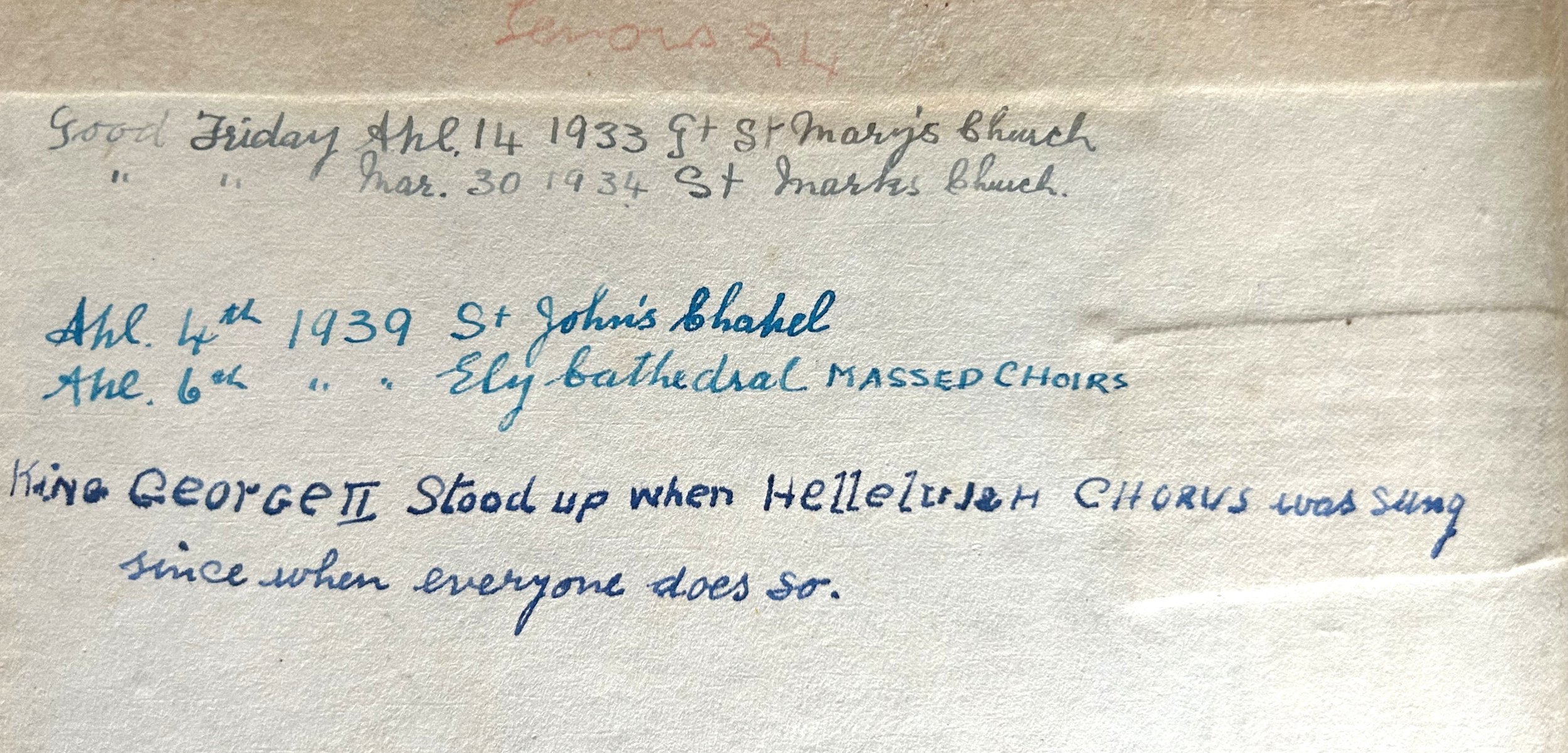
Mr. Blades’s notes written on the inside cover of his copy of ‘The Messiah’
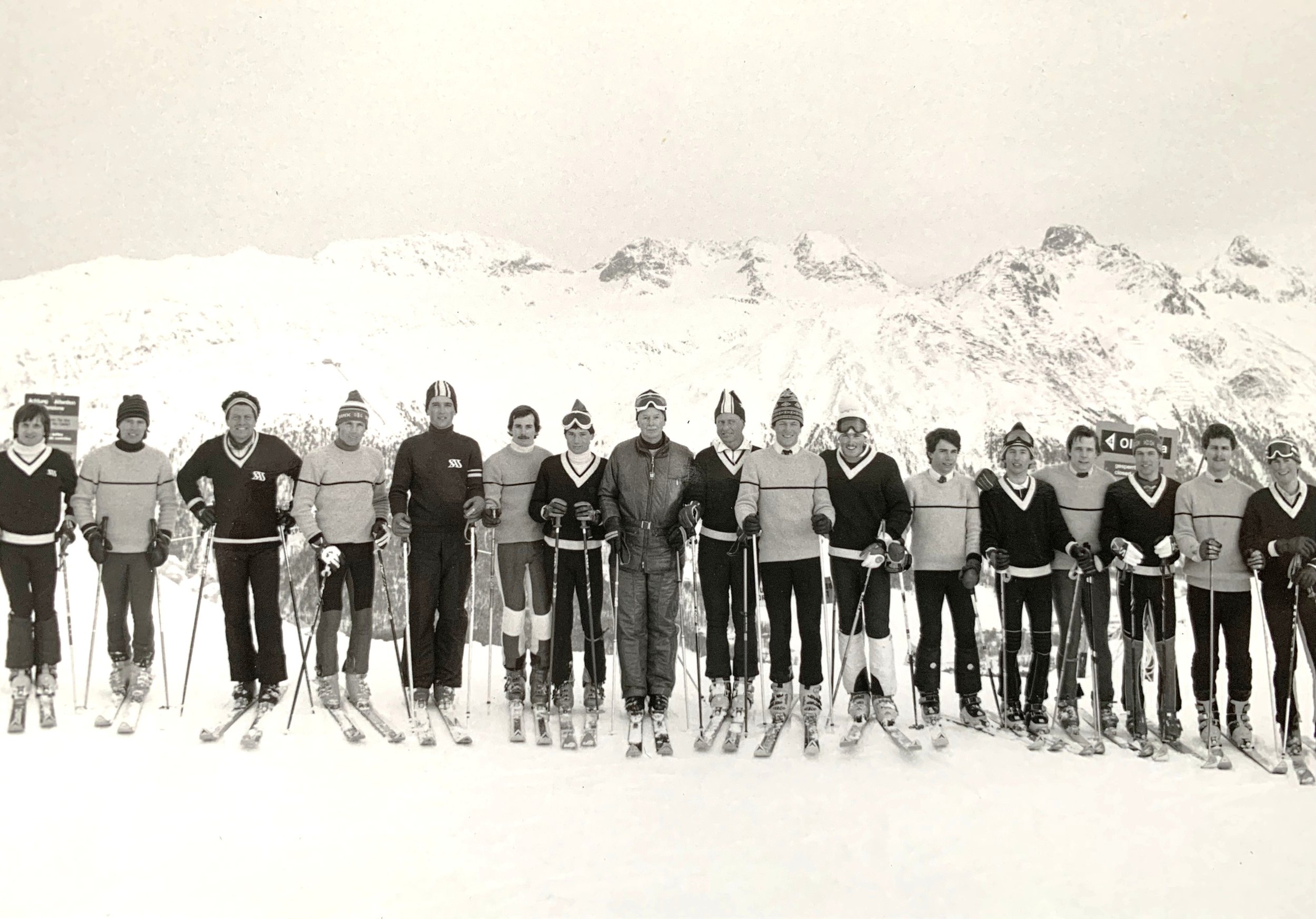
British and Swiss University ski teams, St. Moritz, Switzerland. January 1981. Glenn Blaylock standing sixth from the left.